
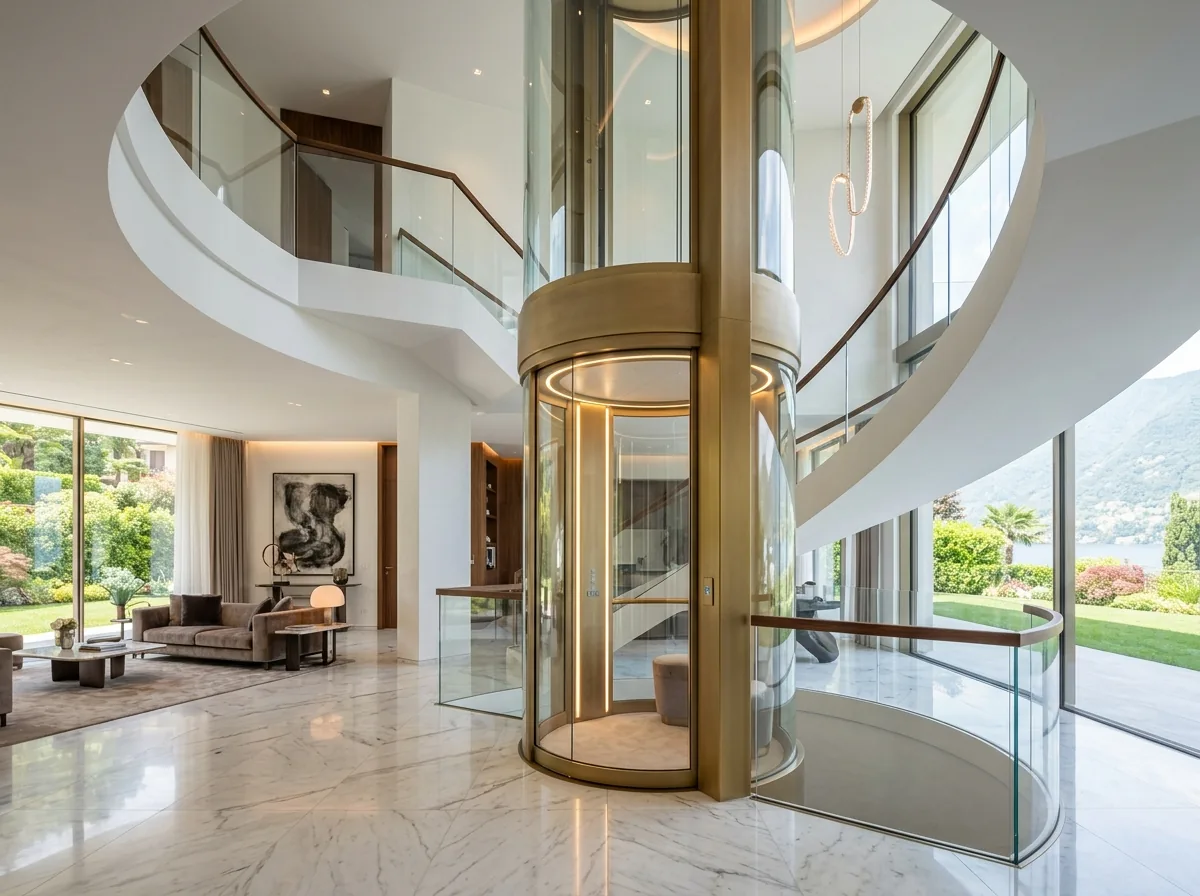
A home lift is no longer a luxury reserved for large villas. Elderly family members, multi-storey homes and future resale value make it a practical investment. Here is what the AK Rise Elevator team checks before recommending a home lift.
1. Available Space & Shaft
The first question is where the lift will go. Options include an internal masonry shaft, a structural steel shaft attached to the building, or using the stairwell void. Pit depth and overhead height (headroom at the top floor) also matter – low-pit and low-headroom solutions exist for existing homes.
2. Factors That Affect Home Lift Cost
- Number of stops / floors – more floors means more rails, doors and wiring.
- Drive type – traction (geared or gearless) vs hydraulic.
- Door type – manual swing, automatic telescopic or centre-opening.
- Cabin finish – MS painted, stainless steel, gold titanium or glass (see cabin options).
- Civil work – shaft construction and pit preparation.
Because every building is different, an accurate quote needs a site inspection. AK Rise Elevator provides this free of cost.
3. Traction vs Hydraulic
Hydraulic lifts suit low-rise homes with limited headroom, while traction lifts are efficient for more floors and frequent use. We recommend the option that fits your structure and usage.
4. Safety Features You Should Insist On
- Automatic Rescue Device (ARD) to bring the cabin to the nearest floor during power failure.
- Overspeed governor and safety gear.
- Door sensors / light curtain and emergency alarm.
- Compliance with IS 14665 standards.
Next Step
Share your floor plan with us on WhatsApp or book a free site visit. Our team will suggest the best home lift for your space and budget.